When buyers search for ring rolling machine price, they often expect one simple number. We understand the temptation. However, two machines with similar names can have very different prices because their working conditions differ. In our experience, the real cost starts with the ring products you need to produce.
At Shandong Ring Rolling Tech, we look beyond machine size alone. We study ring diameter, wall thickness, height, material, production volume, and forging process. These details determine the forces, drive power, control system, tooling, and auxiliary equipment required.
1. Ring Size Sets the Starting Point
Diameter and Wall Thickness Matter
The finished ring dimensions strongly influence equipment configuration. A small industrial ring needs very different capacity from a heavy-duty ring with a large outer diameter. The required rolling force also changes with material, wall thickness, and deformation.
For example, a ring with a 1,500 mm outside diameter may need very different specifications from a 500 mm ring. We therefore avoid quoting equipment from diameter alone. The complete geometry gives us a much clearer starting point.
Height Changes the Equation
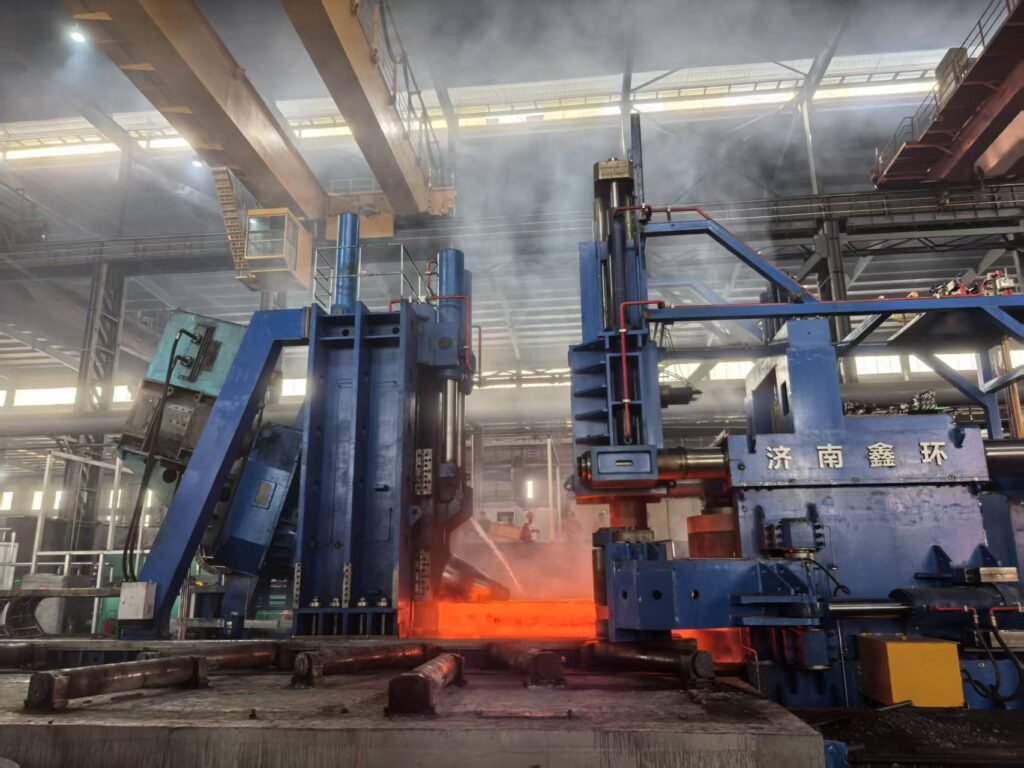
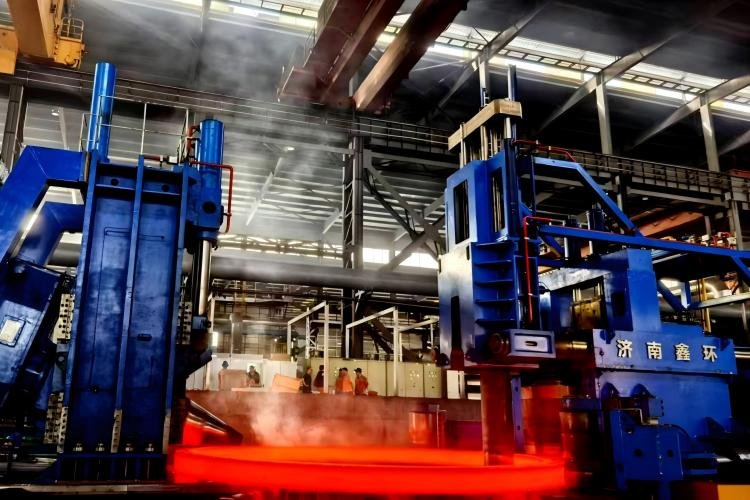
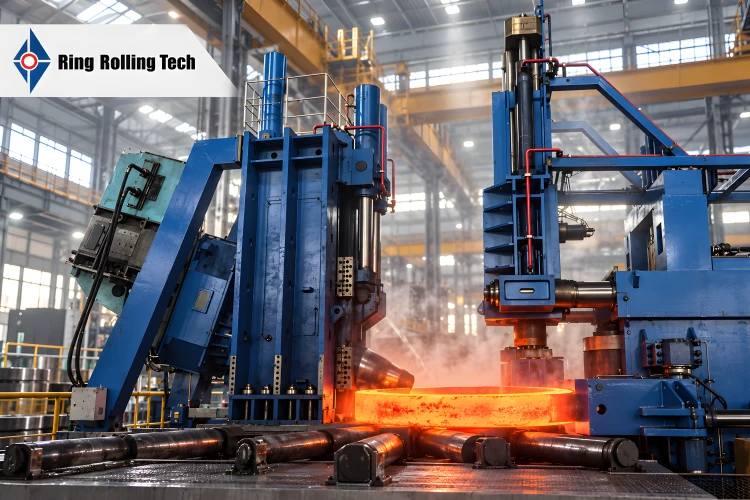
Ring height also affects the required rolling system. Radial rolling reduces wall thickness while increasing diameter. Axial rolling controls height and helps maintain the required profile.
That combination matters when producing complex or tall seamless rolled rings. A machine with stronger axial control may cost more, but it can provide better process stability for demanding ring products.
2. Material Can Push the Price Higher
Stainless Steel Needs More Attention
Not every forgeable material behaves the same way. Carbon steel, alloy steel, and stainless steel can require different rolling forces and temperature control.
Harder materials may require greater machine capacity and more precise process control. Heat retention also becomes important because temperature can change material flow during the forging process.
We always ask about the material grade before recommending equipment. A material name alone may not tell the whole story. The actual grade, temperature range, and production target can change the machine requirements.
3. Automation and Controls Add Value
Manual or CNC Control?
A basic production setup may need fewer automation functions. A high-volume operation may require CNC control, automatic positioning, process monitoring, and recipe management.
Modern radial-axial systems can use process data to control rolling behavior. Research and industrial practice show that process control plays an important role in producing consistent ring dimensions.
This means automation can increase the initial investment. However, it may also reduce operator dependence and improve repeatability. For serious production, the cheapest machine is not always the cheapest solution.
4. Tooling and Auxiliary Equipment Count
The Machine Is Only One Part
The equipment price may include more than the main rolling mill. Depending on the project, the complete line can involve:
- Heating furnace
- Hydraulic forging press
- Punching equipment
- Rolling tooling
- Axial rolls
- Mandrel or ring expander
- Cooling equipment
- Heat treatment equipment
- Measurement and inspection systems
- Automation and control cabinets
The typical seamless rolled rings forging route starts with upsetting and piercing. This creates a hollow, doughnut shaped preform before rolling. The rolling stage then expands the ring while reducing wall thickness.
So, when comparing ring rolling machine manufacturers, ask what the quotation actually includes. A low machine price can become less attractive after you add missing tooling and auxiliary systems.
5. Production Volume Changes the Economics
Cost Per Ring Matters More
A machine for occasional production has different priorities from a high-volume production line. High output may justify faster automation, stronger drives, automatic measurement, and integrated handling.
We recommend calculating the total production cost instead of looking only at the purchase price. Consider:
Total cost = equipment + tooling + energy + labor + maintenance + downtime
Then compare that figure with expected output. This approach helps buyers identify a genuinely cost effective solution.
A more capable system may cost more initially. Yet higher utilization and shorter cycle times can change the economics over several years.
6. Customization and Service Affect Price
Standard Equipment vs. Custom Engineering
Standard configurations usually require less engineering work. Custom projects can involve special dimensions, unusual materials, special profiles, or unique automation requirements.
For example, a customer may want to produce seamless rings with a stepped profile. Another may need equipment for large forged rings used in energy or aerospace applications. These projects require more engineering analysis and process validation.
We also consider installation, commissioning, training, spare parts, and technical support. Good after-sales service has a real economic value, especially when the equipment becomes part of a long-term production line.
What Should You Ask Before Comparing Quotes?
Send Real Production Data
If you contact ring rolling machine manufacturers in China, do not send only a target diameter. Give the supplier enough information to understand the actual job.
We recommend providing:
- Finished OD and ID
- Ring height
- Initial blank dimensions
- Wall thickness
- Material grade
- Required production volume
- Target cycle time
- Ring profile
- Heat treatment requirements
- Machining allowance
- Required automation level
This information helps suppliers calculate the required rolling force, torque, power, tooling, and control configuration.
Compare the Complete Proposal
When comparing a ring rolling machine for sale, look beyond the headline price. Check specifications, included tooling, automation, installation, warranty, training, and spare-parts support.
Also consider the expected rolled ring forging cost. Efficient material utilization can reduce downstream machining. Ring rolling can create seamless forged rings with continuous circumferential grain flow, which supports demanding industrial applications.
The Price Is Really About the Process
We believe equipment cost makes more sense when viewed through the complete production process. The machine must match the material, ring geometry, deformation requirements, output target, and quality standard.
A properly selected system can support applications ranging from bearings and flanges to wind power, pressure vessels, heavy machinery, and aerospace components.
So, instead of asking only, “What is the price?”, we suggest asking, “What configuration will produce my rings reliably?” That question usually leads to a much more useful quotation.
At Shandong Ring Rolling Tech, we welcome production data, drawings, and ring specifications before preparing a recommendation. Contact us today to learn which configuration fits your application and production goals.