Introduction: The Ground Beneath Heavy Forging
A heavy ring rolling mill starts with something many people overlook: the foundation. We often see buyers focus on machine capacity, outer diameter, or production speed. However, without a strong foundation and smart plant layout, even the best equipment cannot perform well.
Large ring rolling requires stability because the process involves huge forces, high temperature, and continuous deformation. A proper layout supports the entire ring rolling process, from billet heating to final inspection. It also protects dimensional accuracy and mechanical properties of large industrial forged rings.
Why Foundation Design Matters for Large Ring Rolling
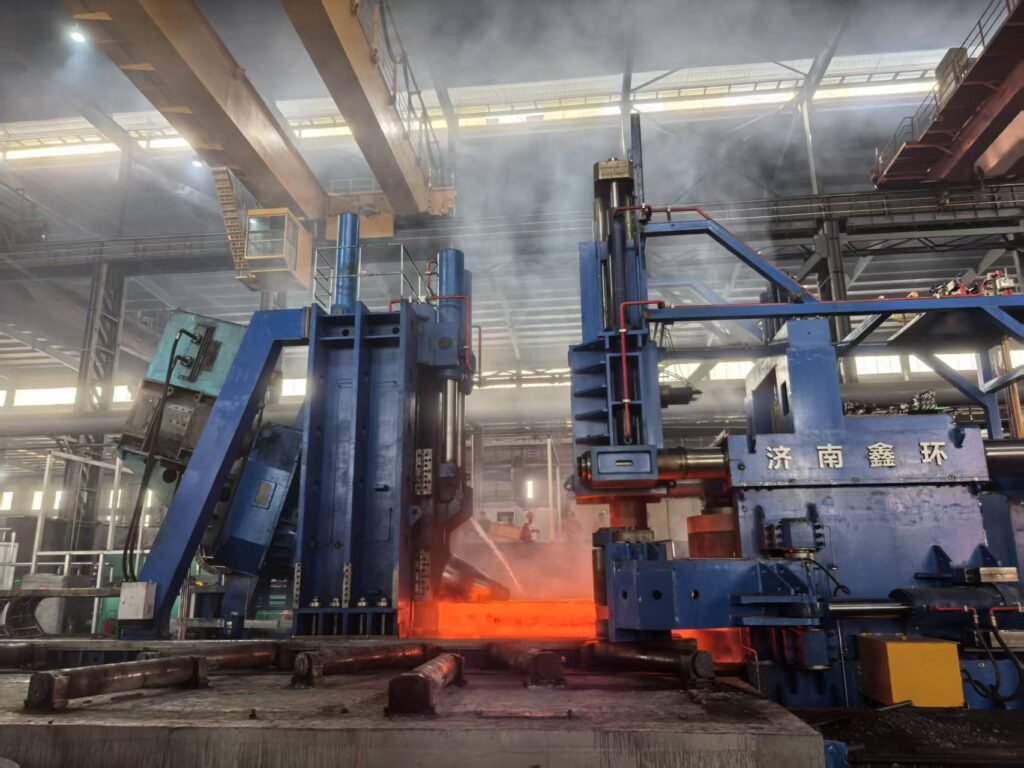
A large ring rolling mill foundation carries more than equipment weight. It absorbs vibration, rolling forces, and impact loads during production. The foundation must match the machine structure and operating conditions.
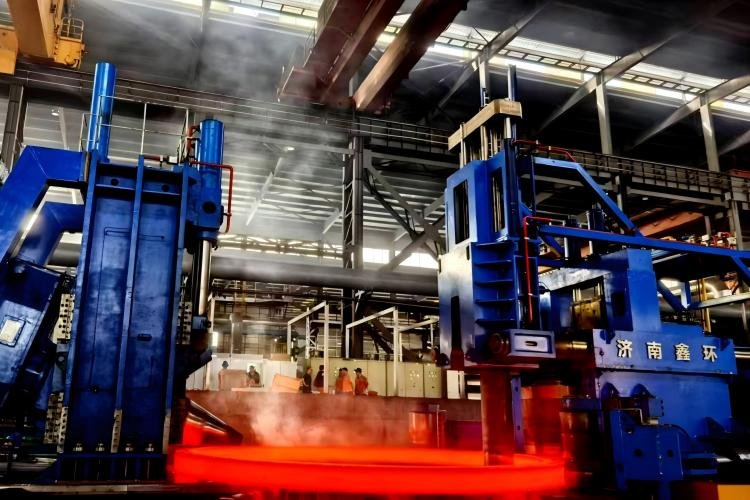
For example, a 13m ring rolling machine may handle large diameter ring forgings for industries such as wind power, aerospace, and pressure vessel manufacturing. These large industrial forged rings can weigh several tons. Any foundation weakness may affect the rolling process and final quality.
Key Foundation Requirements
When we design a foundation plan, we usually consider:
- Equipment weight and dynamic loads
- Maximum ring outer diameter
- Rolling force and torque
- Soil bearing capacity
- Vibration control
- Maintenance access
- Future expansion space
A heavy-duty foundation normally uses reinforced concrete structures. Engineers calculate the load distribution carefully before installation. The goal is simple: keep the equipment stable while the metal forming process runs.
Plant Layout for Efficient Ring Production
A good plant layout creates a smooth production journey. We prefer to design the workshop around the seamless rolled ring forging process, not around the building shape.
The material should move logically through each stage. A typical layout includes:
- Raw material storage area
- Heating furnace section
- Open die forging area
- Ring rolling zone
- Heat treatment area
- Machining and inspection section
This arrangement reduces unnecessary movement. It also lowers handling risks for large diameter ring rolling projects.
Space Planning for Large Diameter Rings
Large diameter ring forgings need enough working space. The workshop must consider the ring size, crane capacity, and operator safety.
Important layout parameters include:
- Ring outer diameter: Ø500 mm to Ø13,000 mm+
- Ring height and cross section
- Crane lifting capacity
- Furnace distance
- Roller access space
- Inspection area
A ring shaped forging may look simple after production. However, producing it requires careful coordination between equipment, workers, and material flow.
Matching Layout With the Ring Rolling Process
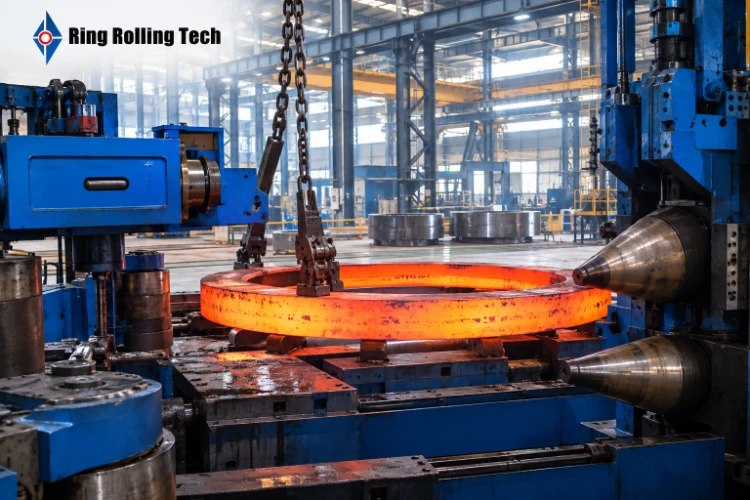
The ring rolling process changes the geometry of heated metal through controlled deformation. The blank expands in diameter while the cross section reduces.
During production, the main factors include:
- Material grade
- Heating temperature
- Reduction speed
- Axial roll control
- Radial deformation
- Die design
For alloy steels and stainless steel applications, temperature control becomes especially important. High temperature variations can influence grain structure and final mechanical properties.
Supporting Equipment Placement
We recommend placing supporting equipment close to the main rolling area.
Common supporting systems include:
- Heating furnaces
- Manipulators
- Measuring devices
- Cooling systems
- Heat treatment equipment
A shorter transportation route helps maintain forging temperature. It also improves consistency during the rolled ring forging process.
Foundation and Layout Challenges for Large Forgings
Heavy forging plants face several practical challenges. The biggest one is usually space.
A large ring rolling workshop needs vertical and horizontal planning. The building height must support cranes and large dies forge operations. The floor area must allow operators to safely handle massive components.
Another challenge involves future production changes. A company producing wind turbine rings today may produce pressure vessel rings tomorrow. Flexible layout design creates more business opportunities.
Building a Reliable Heavy Ring Rolling Facility
A successful facility combines strong foundations, efficient workflow, and accurate process control. We believe the foundation is not just concrete under the equipment. It is the first step toward reliable manufacturing.
Whether producing large diameter ring forgings, aerospace components, or heavy alloy steel rings, the plant layout directly affects quality and productivity. A well-designed facility helps manufacturers achieve stable production and consistent dimensional accuracy.
Before selecting a ring rolling mill, companies should evaluate the complete production environment. The machine, foundation, building, and process must work together as one system.