Why Modern Ring Forming Matters
Heavy industry never slows down. Wind power projects grow taller every year. Aerospace parts demand tighter tolerances. Offshore engineering needs stronger forged rings. Because of this, manufacturers now expect more from every ring rolling machine on the production floor.
We have worked in this industry for years, and honestly, the pace still surprises us. Ten years ago, a 5-meter ring impressed customers. Today, many buyers ask about a 13m ring rolling machine before discussing anything else. Bigger rings now mean bigger business.
At Shandong Ring Rolling Tech, we build equipment for companies that cannot afford unstable production. They need high precision, repeatable rolling, and long machine life. More importantly, they want machines that operators actually enjoy using. Nobody likes fighting with outdated controls at 2 a.m. during a hot forging cycle.
Modern forging shops demand speed, stability, and digital control. That is exactly where advanced rolling systems shine.

What Is a Ring Rolling Machine?
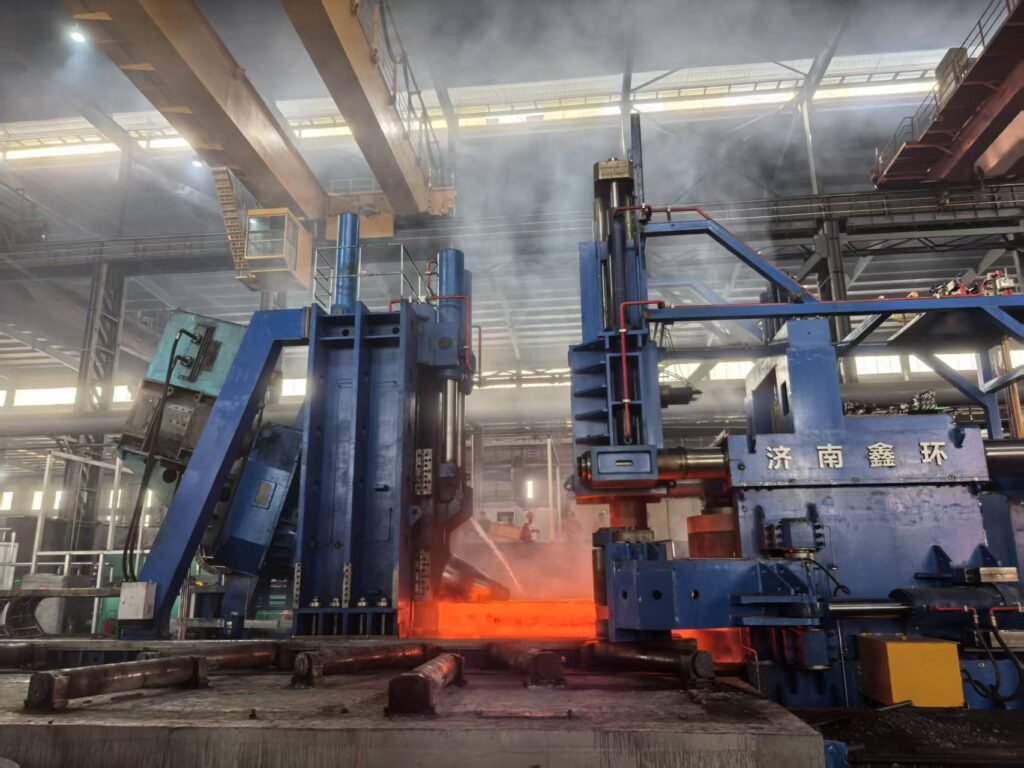
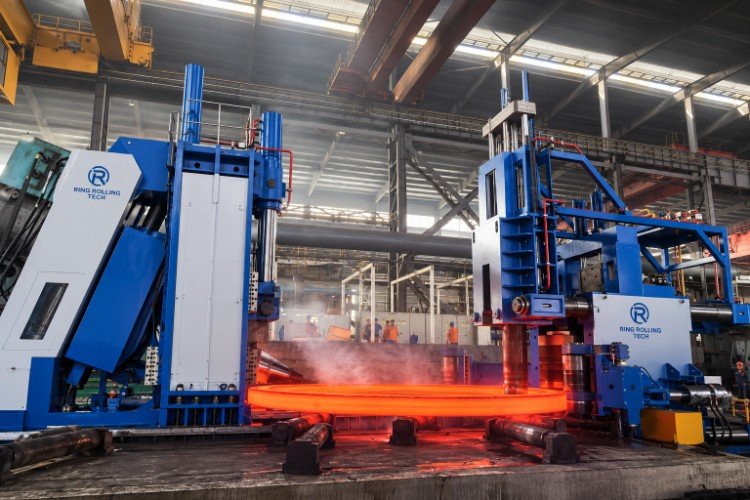
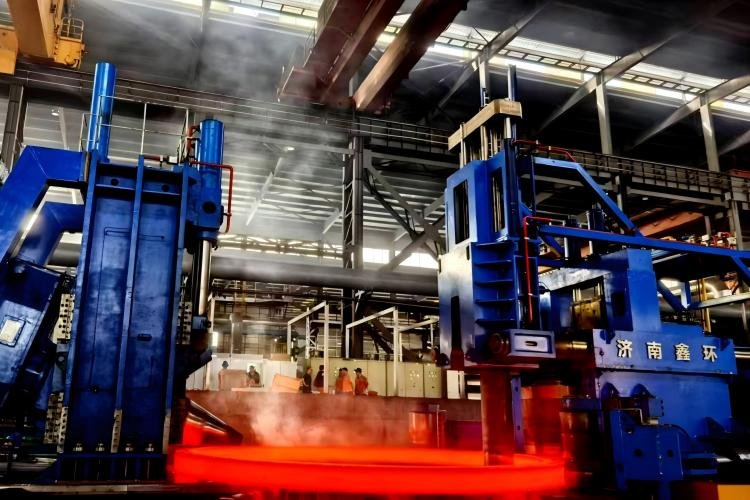
A ring rolling machine expands a heated metal blank into a seamless ring. The process uses radial and axial pressure to increase the diameter while controlling the wall thickness and height.
The workflow looks simple on paper:
- Heat billet
- Punch center hole
- Preform ring
- Roll ring
- Calibrate dimensions
- Heat treatment
- Final machining
Still, real production feels far more intense. Temperatures often exceed 1100°C. Forces reach hundreds of tons. One mistake can ruin expensive alloy material within seconds.
That is why machine rigidity matters so much.

Key Working Components
Main Roll System
The main roll drives the ring rotation. It handles the primary deformation force during expansion. Stable torque keeps the rolling process smooth.
Mandrel Unit
The mandrel pushes against the ring wall. This pressure controls thickness reduction and diameter growth simultaneously.
Axial Rollers
Axial rollers manage ring height. They prevent deformation issues such as waviness or uneven edges.
CNC Control Cabinet
Modern CNC ring rolling machine systems use servo control and PLC integration. Operators can adjust parameters in real time without stopping production.
Why Seamless Rings Dominate Heavy Industry
Cast rings often contain internal defects. Welded rings introduce weak points. Seamless rolling eliminates many of these problems.
That advantage explains why industries rely heavily on rolled rings.
Common Applications
- Wind turbine bearing rings
- Aerospace engine rings
- Nuclear flange rings
- Slewing bearings
- Pressure vessel rings
- Gear blanks
- Marine components
- Railway bearing parts
We once visited a wind energy customer producing offshore bearings. One finished ring measured over 9 meters. Standing beside it felt like standing next to a subway tunnel. That moment reminds us why large forging technology still matters.
Mechanical Advantages
Rolled rings provide:
- Better grain flow
- Higher fatigue resistance
- Improved impact strength
- Lower material waste
- Better concentricity
- Reduced machining allowance
These benefits directly reduce production costs.
Understanding the D53K Series
The D53K series remains one of the most recognized configurations in the forging industry. Many buyers search specifically for D53K because the platform balances automation and heavy-duty rolling capacity.
We manufacture several D53K models for different production requirements.
Typical Specifications

Each factory has different priorities. Some need speed. Others focus on titanium or nickel alloys. Therefore, customization matters more than flashy marketing.
Why Buyers Choose D53K
Stable Hydraulic Performance
Hydraulic response directly affects ring accuracy. We optimize pressure feedback loops to reduce fluctuation during rolling.
Better Automation
Modern D53K equipment supports:
- Automatic centering
- Real-time dimension monitoring
- Recipe storage
- Remote diagnostics
- Automatic lubrication
Lower Labor Intensity
Older forging lines required constant manual adjustment. Operators practically wrestled the machine during rolling. Modern systems simplify operation dramatically.
Thankfully, fewer people now leave work covered in graphite dust and frustration.
The Rise of CNC Ring Rolling Machine Technology
Digital manufacturing changed forging forever. Years ago, experienced operators relied mainly on intuition. Skilled workers still matter today, but software now assists every major movement.
A CNC ring rolling machine improves consistency through automatic parameter control.
What CNC Changes
Traditional rolling often creates:
- Ovality issues
- Wall thickness variation
- Surface instability
- Excessive correction cycles
CNC systems reduce these risks.
Important CNC Features
Servo Synchronization
Servo motors coordinate radial and axial movement precisely. This synchronization improves geometry control.
Data Logging
Production managers can record:
- Rolling force
- Diameter growth
- Temperature trends
- Hydraulic pressure
- Rolling speed
That data helps optimize future production cycles.
Remote Maintenance
Nobody enjoys unexpected downtime. Remote diagnostics help engineers solve issues quickly without lengthy shutdowns.
We once helped a customer troubleshoot a sensor issue remotely within 30 minutes. Years ago, that same problem might have stopped production for two days.
Horizontal Ring Rolling Machine vs Vertical Design
Many buyers ask whether they should choose a horizontal ring rolling machine or a vertical structure.
The answer depends on the application.
Horizontal Layout Advantages
Horizontal systems offer:
- Easier loading
- Better large-ring handling
- Stable heavy forging support
- Improved operator visibility
For oversized rings, horizontal structures often provide better stability.
Vertical Layout Advantages
Vertical machines work well for:
- Small precision rings
- Limited workshop space
- High-speed production
Still, large industrial forging shops usually prefer horizontal layouts for heavy-duty operations.
Choosing the Right Configuration
Before buying equipment, customers should evaluate:
- Ring diameter range
- Material type
- Production volume
- Workshop layout
- Crane capacity
- Automation goals
Skipping this step creates expensive mistakes later.

The Growing Demand for 13m Ring Rolling Machine Systems
Oversized rolling technology has become a major trend. Wind power expansion drives much of this demand.
Modern offshore turbines require massive bearing rings. Some projects now exceed 15 MW output. Those systems need extremely large forged components.
That is where the 13m ring rolling machine enters the conversation.
Technical Challenges of Large Rings
Large rings create difficult engineering problems.
Temperature Control
The outer diameter cools rapidly during rolling. Uneven cooling can create cracks or distortion.
Structural Rigidity
Massive rolling forces demand stronger machine frames. Even slight deflection affects final dimensions.
Material Flow Stability
Controlling grain flow becomes harder as the diameter increases.
We continuously optimize frame design and hydraulic synchronization to address these challenges.
Industries Driving Large Ring Demand
- Offshore wind energy
- Nuclear power
- Aerospace
- Petrochemical projects
- Heavy mining equipment
The market keeps moving toward bigger diameters and higher precision.
Honestly, machine size alone no longer impresses customers. They care more about dimensional stability and long-term reliability.
Materials Used in Ring Rolling
Different industries require different materials. Every alloy behaves differently during deformation.
Common Materials
MaterialTypical Application
Carbon Steel Flanges and bearings
Alloy Steel Heavy machinery
Stainless Steel Petrochemical Systems
Titanium Alloy Aerospace
Nickel Alloy High-temperature components
Aluminum Alloy Lightweight structures
Why Material Knowledge Matters
Some alloys crack easily. Others resist deformation aggressively. Proper rolling parameters prevent costly defects.
For example:
- Titanium requires precise temperature windows
- Stainless steel needs a stable deformation speed
- Nickel alloys demand a higher rolling force
Good equipment alone cannot solve poor process control.
That is why we often help customers optimize both machine configuration and rolling technology together.
How Automation Improves Production Efficiency
Labor shortages affect many forging plants worldwide. Automation now plays a critical role in factory competitiveness.
Smart production lines reduce manual intervention while improving consistency.
Automation Upgrades
Automatic Measurement
Laser measurement systems monitor:
- Diameter
- Roundness
- Wall thickness
Real-time feedback improves dimensional accuracy.
Intelligent Lubrication
Automatic lubrication protects bearings and guides during heavy rolling cycles.
Integrated Production Lines
Modern systems connect:
- Heating furnaces
- Manipulators
- Rolling equipment
- Cooling stations
- CNC machining centers
This integration shortens production time dramatically.
One customer reduced total cycle time by nearly 28% after upgrading their automated handling system.
Maintenance Tips for Longer Machine Life
Heavy forging equipment works under brutal conditions. Heat, vibration, and scale constantly attack components.
Good maintenance prevents expensive downtime.
Daily Maintenance Checklist
- Check hydraulic oil temperature
- Inspect lubrication flow
- Monitor bearing vibration
- Clean oxide scale
- Verify sensor signals
- Inspect roller surfaces
Common Problems
Hydraulic Leakage
Seal wear often causes pressure instability. Regular inspection reduces failure risk.
Roller Wear
Poor lubrication accelerates surface damage.
Sensor Drift
Calibration errors affect dimensional accuracy.
Preventive maintenance always costs less than emergency repairs. Every experienced factory manager learns this lesson eventually.
Usually, the hard way.
How Much Efficiency Can You Gin in Ring Rolling
Future Trends in Ring Rolling Technology
The forging industry continues evolving rapidly. Digital manufacturing and energy efficiency now shape equipment development.
Emerging Technologies
- AI-assisted rolling control
- Digital twin simulation
- Fully automatic production cells
- Energy-saving hydraulic systems
- Cloud-based monitoring
Factories increasingly want smarter equipment, not just larger machines.
Environmental regulations also influence machine design. Lower energy consumption now matters almost as much as output capacity.
What Buyers Expect Today
Modern customers expect:
- Faster commissioning
- Remote technical support
- Stable spare parts supply
- Flexible customization
- Long equipment lifespan
Trust matters just as much as technical specifications.
We understand that reality clearly because many customers rely on our equipment for production schedules worth millions of dollars.
That responsibility never feels small.
Why Manufacturers Choose Shandong Ring Rolling Tech
We focus entirely on rolling technology. That specialization allows us to improve every detail continuously.
Our equipment supports industries requiring:
- High precision
- Large diameter capacity
- Heavy deformation force
- Stable automation
- Long-term reliability
We provide:
- Customized machine solutions
- Installation support
- Operator training
- Process optimization
- Long-term technical service
More importantly, we listen carefully before recommending equipment. Every forging plant works differently.
Some customers prioritize flexibility. Others need maximum output. A few simply want machines that survive decades without drama.
Honestly, those customers might be our favorite type.

Final Thoughts
The forging industry continues pushing technical boundaries. Larger diameters, tighter tolerances, and smarter automation now define market competition.
A modern ring rolling machine must deliver more than raw force. It must provide stability, precision, and digital integration simultaneously.
From D53K systems to advanced CNC ring rolling machine solutions, manufacturers now expect equipment that supports long-term growth instead of short-term production alone.
At Shandong Ring Rolling Tech, we continue improving our technology because industrial customers never stop raising the bar. And frankly, neither do we.